The Rise Of The Chief Longevity Officer: Demographics Hits Strategy

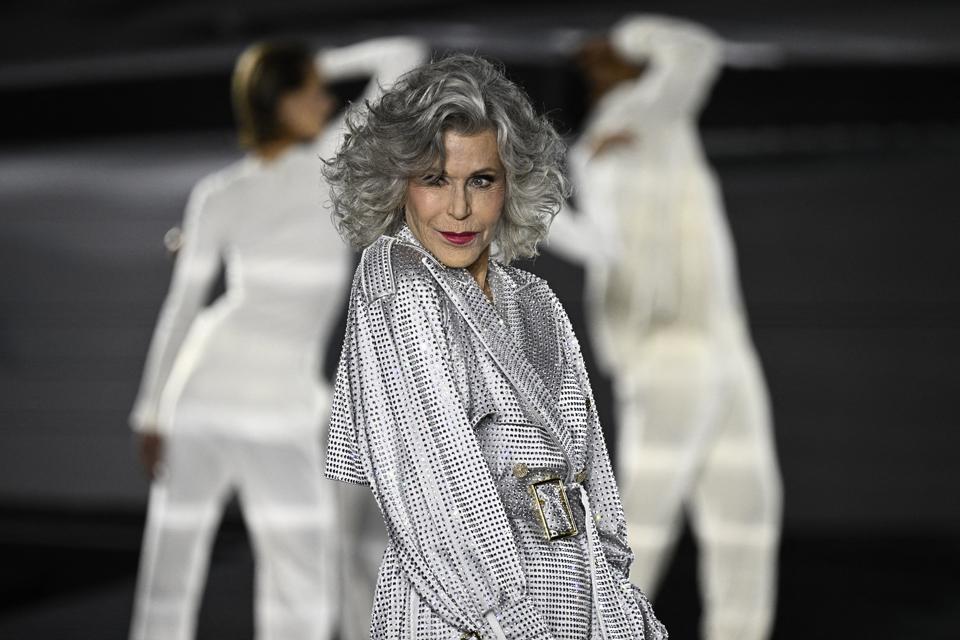
New Look L’OREAL (Photo by JULIEN DE ROSA / AFP) (Photo by JULIEN DE ROSA/AFP via Getty Images)
AFP via Getty Images
A quiet but profound shift is reshaping the corporate landscape. Beyond the clamour around AI and climate. It’s demographics. As populations grow older and lives stretch longer, forward-thinking companies are beginning to appoint Chief Longevity Officers — and embedding demographic strategies at the heart of business transformation.
From beauty to insurance, from Asia to Europe, a new generation of corporate leaders is treating longevity not as a costly headache, but as a huge new market opportunity. They are reframing ageing from stigma to strength. And in doing so, they’re helping organisations stay relevant in an era where the fastest-growing customer and talent segments are over 50.
From Marketing to Mindset: L’Oréal’s Intergenerational Revolution
At L’Oréal, the world’s largest cosmetics company, longevity has been elevated to the same strategic tier as climate change and AI. Under the leadership of Murielle Arnould, Director of Organization & Future of Work and a 27-year veteran of the firm — the company launched L’Oréal for All Generations, a global programme that repositions age as an asset in both workforce and marketplace.
Smart Framing For All Ages
L’OREAL
What’s impressive is the scope. Built on five pillars — intergenerational exchange, health and wellness, employability, retirement transitions, and alumni engagement — the programme touches nearly every corner of the business. Employees over 40 are invited for in-depth medical check-ups, lifestyle coaching, and mentoring opportunities. All employees, regardless of age, are trained on L’Oréal’s in-house GPT and digital tools, ensuring no one is left behind in the AI era.
There’s also cultural rebranding underway. Campaigns now feature age-proud icons like Jane Fonda and Andie MacDowell flaunting grey hair, a revolution in a company that has long defined hair colouring. The company’s co-sponsorship of Forbes’ 50 Over 50 signals a global repositioning of age from invisible to aspirational. And a move beyond employee engagement to market repositioning.
A strategic longevity prioritisation
L’OREAL
This isn’t just a European initiative. Subsidiaries in China, the US, and beyond are customising the framework. In Shanghai, where ageing is accelerating but the workforce remains young, the programme has been used to model long-term career viability and reinforce retention. This is longevity not as goodbye perk, but as a talent pipeline.
Insurance as Longevity Infrastructure: Fidelidade’s Strategic Pivot
Portugal’s largest insurer, Fidelidade, has also stepped up. In 2023, Mafalda Honório was appointed Head of Longevity — a title rare enough to raise eyebrows, yet visionary enough to lead a demographic pivot.
Mafalda Honório, Head of Longevity
Fidelidade
Portugal is one of Europe’s oldest countries. For Fidelidade, that’s not just a population stat — it’s a business imperative. Under Honório’s leadership, the company is weaving longevity into everything from product innovation to public perception.
Externally, the shift began with storytelling. The company’s award-winning advertising campaign, Nova Idade. Nova Vida (“New Age, New Life”), portrayed older adults not as dependents but as future-builders: dancing, coding, creating. The spot went viral, sparking a national conversation on ageing and agency.
Internally, Honório is orchestrating transformation across functions — from marketing to HR to product development. Fidelidade now offers insurance packages that integrate health monitoring, home care services, and financial planning tailored to longer lives. Training and leadership programmes are being redesigned with longer careers in mind. The goal is to meet longevity not as a threat to be managed, but a growth market to take the lead on.
Fidelidade’s New Advertising Campaign
FIDELIDADE
The Emergence of a New Role: Heads of Longevity
L’Oréal and Fidelidade may be early movers, but they are not alone. Across sectors and continents, a handful of companies are waking up to the strategic dimensions of demographic change — and appointing people to lead.
The ROAR report covered Kenneth Ryan’s appointment as Chief Longevity Officer at The Estate, the ultra-luxury hospitality brand co-founded by Sam Nazarian and Tony Robbins. It shows how longevity can create entirely new market categories. After decades with Marriott International, Ryan is integrating AI-driven health assessments and biological age tracking into premium guest experiences. The Estate positioned the role as one of its first four hires, recognising that longevity is core to the business model.
At an insurance concern like Fidelidade, Honório’s opportunity is clear. The company, she explains, is uniquely positioned to tackle two of the three pillars of longevity: health and wealth (the third being thrivespan). While it’s true that traditional insurance purchases are transactional, she points out that longevity creates opportunities for ongoing conversations and deeper relationships with customers who could be clients over decades.
By 2030, every living baby boomer will have reached 65+, creating the largest ‘older’ population in U.S. history. That demographic tsunami isn’t just changing retirement planning — it’s forcing entire industries to rethink customer lifecycles, employee productivity, and market opportunities. The math is simple: If your customers and employees are going to live 20-30 years longer than the generations before them, business models need to evolve accordingly.
Key Strategies From The Pioneers
- Start with strategic alignment. Ensure longevity connects to broader business strategy and customer needs.
- Secure senior leadership support. Ensure the role is positioned at senior level.
- Focus on both sides of the coin: markets and talent. Addressing the evolving needs of the fast-growing older consumer segment while retaining and developing older workers are both powerful business drivers.
- Don’t treat longevity as a marginal fad. Approach it as something that’s set to deliver measurable, meaningful results for your business.
Measuring Impact
Measuring the results of longevity strategies can be, admittedly, tricky. Traditional metrics like quarterly revenue and short-term ROI are poorly suited for initiatives that might take years or decades to show impact. The solution lies in shifting from purely quantitative metrics to meaningful qualitative insights while still maintaining business discipline.
Honório initially designed comprehensive scorecards with traditional KPIs, only to realise she needed to lay extensive groundwork first. Instead of focusing on just sales metrics, she found success through consumer research that explored people’s worries and needs across different age segments.
Structuring Success
Perhaps the biggest obstacle isn’t external market conditions but, internal, organisational hurdles. After all, these are transversal roles requiring collaboration across many departments — HR, marketing, operations, finance — often disrupting established workflows and existing priorities.
At Fidelidade, the key to overcoming that initial hurdle was creating emotional investment in the concept. Since longevity touches everyone personally, Honório helped employees connect with the mission in ways that traditional corporate initiatives couldn’t achieve.
France’s Club Landoy, launched by Sybille Lemaire, has built a longevity charter that over 300 companies have signed, committing to better integrate 50+ workers. In Japan, Dai-ichi Life has restructured its insurance products to align with an ageing society. In the UK, Legal & General is experimenting with intergenerational living models. Consulting firms like Mercer and McKinsey are building out longevity consulting services, while startups such as the Modern Elder Academy and AgeTech Collaborative are focusing on midlife reinvention and senior tech. In Portugal, Catolica Lisbon School of Business and Economics runs a Longevity Leadership programme for executives.
In the US, AARP continues to lead the policy and advocacy frontier, pushing for age-inclusion metrics. Yet most companies still lag behind. Few offer career-long reskilling. Ageism remains both widespread and under-acknowledged — the “last acceptable bias” in many workplaces. That’s why the arrival of dedicated Heads of Longevity is a powerful signal. It moves age from afterthought to agenda.
What Longevity Leaders Are Teaching Us
What unites these emerging leaders is not just a shared demographic reality — it’s a mindset shift. These companies aren’t just managing older workers. They’re reframing longevity as a strategic design lens: for workforce management, product development, and innovation.
They recognise that an older workforce brings assets many organisations desperately need: experience, perspective, emotional intelligence, loyalty. They understand that older consumers are not a niche, but a majority — and that they have wealth, wisdom, and expectations that are often unmet. And they are redesigning cultures, benefits, and brand narratives to reflect these truths.
They’re also investing where it counts. In L’Oréal’s case, that means deploying AI and health benefits across age lines. In Fidelidade’s, it means creating a cross-functional longevity office that spans strategy and service. In both cases, it means building credibility from the inside out — aligning internal age inclusion with external age-savvy marketing.
And most notably, they’re not doing it alone. Leaders like Arnould and Honório are working across industries, collaborating through networks like Club Landoy and global longevity forums. They’re helping to create a new professional field — and a new business imperative.
A Strategic Inflection Point
We’ve reached a demographic tipping point. For the first time in history, five generations are sharing the workplace. In many countries, there are more people over 60 than under 20. Longevity is no longer a future scenario. It’s a present reality — one most companies have yet to adequately prepare for.
But the early adopters are showing what’s possible.
They’re teaching us that longevity isn’t a burden to manage — it’s a frontier to lead. That age isn’t just a number — it’s a new lens on leadership, innovation, and inclusion. And that those who embrace it will not just retain talent — they will future-proof their business.
The question now is simple: Who’s next?
link