
Pizza Hut Marketing Strategy (2025)

Pizza Hut has built its reputation by combining consistent quality with smart marketing choices that adapt to changing consumer behavior. Pizza Hut marketing strategy focuses on convenience, localized offerings, and strong brand positioning that keep it competitive in a crowded market. By blending traditional advertising with digital-first initiatives, the company continues to reach both long-time customers and younger audiences.
The brand sets clear goals around accessibility, customer loyalty, and innovation. Whether through geo-targeted campaigns and community sponsorships or by partnering with influencers to create buzz, Pizza Hut aligns its objectives with strategies that resonate across diverse markets. These efforts show how a global chain can still feel relevant at the local level.
Understanding who Pizza Hut targets, how it uses its marketing mix, and which channels drive engagement provides valuable insight into why the brand remains a leader. The following sections break down these elements and show how its strategies can be applied to other businesses looking to strengthen their own marketing approach.
Pizza Hut Goals And Objectives
Pizza Hut sets clear goals to strengthen its position in the quick-service restaurant sector. As part of Yum Brands, the company aligns its objectives with long-term growth, customer satisfaction, and operational efficiency.
A key objective is to expand its digital presence. The brand invests in mobile apps, online ordering, and delivery platforms to improve convenience and capture the growing demand for digital-first dining experiences.
Another important goal is product innovation. Pizza Hut frequently introduces new menu items and adapts flavors to local markets, ensuring relevance across diverse regions. This approach supports its broader marketing strategy of balancing global consistency with local customization.
The company also focuses on pricing and promotions. By offering discounts, loyalty programs, and bundled deals, Pizza Hut aims to attract value-seeking customers while maintaining profitability.
To clarify its priorities, the following table highlights core objectives:
| Goal | Objective |
| Digital Growth | Expand online ordering, delivery, and app usage |
| Product Innovation | Launch new flavors and adapt menus to local tastes |
| Customer Engagement | Strengthen loyalty programs and personalized marketing |
| Operational Efficiency | Improve service speed and consistency across outlets |
| Market Expansion | Open new stores in high-potential regions under Yum Brands’ global reach |
Sustainability also plays a role in its objectives. Pizza Hut works toward reducing packaging waste and improving supply chain practices, aligning with Yum Brands’ corporate responsibility commitments.
Who Is Pizza Hut’s Target Audience?

Pizza Hut focuses on consumers who value convenience, affordability, and variety in their dining choices. The brand appeals to families, young adults, and working professionals through tailored menus, pricing, and promotions.
Pizza Hut Demographics
Pizza Hut’s primary demographic includes families with children, college students, and young professionals. Families often choose Pizza Hut for shared meals, while students and professionals rely on it for quick, affordable dining.
Age groups range mostly from 18 to 44 years old, with a balanced distribution across men and women. This broad age range allows Pizza Hut to position itself as both a family-friendly restaurant and a casual dining option for younger audiences.
Income levels vary, but the brand primarily targets middle-income households. Frequent promotions and bundle deals make Pizza Hut accessible to those who want value without sacrificing quality.
Secondary demographics include older adults who enjoy dine-in experiences on weekends and evenings, as noted in target market research. This mix of primary and secondary groups helps Pizza Hut maintain steady demand across different customer segments.
Pizza Hut Psychographics
Psychographic factors play a key role in Pizza Hut’s strategy. Customers often value convenience, comfort food, and social dining experiences. Many choose Pizza Hut for group gatherings, celebrations, or casual family meals.
Consumers also seek variety and customization. Pizza Hut addresses this by offering diverse toppings, crust options, and side dishes. This flexibility appeals to people who want meals tailored to their tastes.
Health-conscious customers represent a smaller but growing segment. Pizza Hut has responded by introducing lighter menu options and plant-based alternatives in select markets. This aligns with evolving consumer expectations.
Brand loyalty is another factor. Many customers associate Pizza Hut with nostalgia and reliability, which reinforces repeat purchases. By addressing motivations and pain points, Pizza Hut strengthens satisfaction and loyalty, as highlighted in a marketing case study.
Pizza Hut Geography
Pizza Hut operates in over 100 countries, but its approach adapts to local preferences. In the United States, it emphasizes delivery and carryout, while in Asia and Europe, dine-in restaurants remain popular.
Menus often reflect local tastes. For example, Pizza Hut offers paneer and tandoori pizzas in India and seafood toppings in Japan. This localization strategy helps the brand connect with regional audiences, as explained in its global marketing approach.
Urban areas are a key focus due to higher population density and demand for quick-service dining. However, Pizza Hut also operates in suburban and smaller towns, where family dining is a stronger driver of sales.
Geographic segmentation allows Pizza Hut to balance global consistency with local adaptation, ensuring relevance across diverse markets.
Pizza Hut Behavior
Behavioral segmentation highlights how customers interact with the brand. Many order during weekends, evenings, or special events such as sports games and holidays. Promotions like buy-one-get-one-free deals and seasonal discounts drive repeat purchases, as shown in its pricing strategy.
Occasional buyers often choose Pizza Hut for convenience, while loyal customers engage with the brand through mobile apps, delivery platforms, and loyalty programs.
Group dining behavior is also significant. Families and friends frequently order larger pizzas, bundles, or party boxes to share. This aligns with Pizza Hut’s positioning as a shared meal experience.
By analyzing purchase frequency, order size, and promotional response, Pizza Hut fine-tunes its offerings to maximize engagement and retention. This behavior-driven approach keeps the brand competitive in the global quick-service restaurant market.
Marketing Mix Of Pizza Hut
Pizza Hut applies a structured marketing mix to maintain its position as one of the largest pizza chains globally. Its approach balances menu variety, pricing strategies, distribution channels, and promotional activities to meet customer needs while staying competitive.
Pizza Hut Product
Pizza Hut offers a diverse menu designed to serve different tastes and preferences. Its signature pizzas remain the core product, available in multiple crust styles such as pan, stuffed, thin, and hand-tossed.
Beyond pizza, the brand includes pasta, salads, and appetizers to appeal to a wider customer base. Popular add-ons like garlic breadsticks and chicken wings strengthen its appeal as a casual dining option.
Desserts such as brownies and cinnamon sticks, along with a range of beverages, complete the dining experience. This variety allows Pizza Hut to serve both dine-in and delivery customers with consistent quality.
The brand also adapts its menu to local markets. For example, in Asia, it introduces region-specific toppings and side dishes to reflect cultural food preferences. This localization helps maintain relevance while preserving its global brand identity.
Pizza Hut Price
Pizza Hut uses a value-based pricing strategy that balances affordability with quality. It positions itself slightly above budget pizza chains but below premium dining restaurants. This middle-ground approach attracts both families and young professionals.
The company frequently applies bundle deals such as “meal for two” or “family combos.” These packages provide cost savings while encouraging customers to purchase multiple items like pizza, pasta, and beverages together.
Pricing also varies by region. In markets like India, Pizza Hut offers entry-level pizzas at accessible price points, while in developed markets it emphasizes mid-range options. This flexibility ensures the brand remains competitive against rivals like Domino’s.
Discounts and promotional pricing are common during holidays, sports events, and online ordering campaigns. These tactics increase short-term sales while driving customer loyalty.
Pizza Hut Place
Pizza Hut operates through a multi-channel distribution system. Customers can dine in at traditional restaurants, order takeout, or use delivery services. The brand also partners with third-party delivery apps to extend its reach.
Its physical outlets vary in format. Some locations function as casual dining restaurants with a full menu and table service, while others are smaller express outlets focused on quick service and delivery.
Globally, Pizza Hut has more than 18,000 outlets across over 100 countries. This extensive presence ensures strong accessibility and brand visibility. It also adapts restaurant layouts and service models to fit local dining habits and space availability.
Digital ordering platforms and mobile apps play a crucial role in convenience. Features such as GPS tracking and contactless delivery improve customer experience and streamline operations.
Pizza Hut Promotion
Pizza Hut relies on a mix of traditional advertising and digital marketing. Television and outdoor ads highlight its family-friendly image, while social media campaigns target younger audiences with interactive content and limited-time offers.
Promotional strategies often feature discount codes, coupons, and loyalty programs. These encourage repeat purchases and strengthen engagement with frequent customers.
The company also invests in sports sponsorships and event tie-ins. For instance, Pizza Hut has partnered with major sporting leagues to increase visibility during high-profile events.
Digital channels are increasingly important. Personalized email campaigns, push notifications on apps, and targeted ads on platforms like Facebook and Instagram help drive online orders. According to MBA Skool’s analysis, this integration of offline and online promotion supports its competitive edge.
Collaborations with delivery platforms and seasonal campaigns further enhance brand recall. By balancing broad advertising with localized promotions, Pizza Hut maintains consistent customer engagement across diverse markets.
What Are Pizza Hut’s Strategies?
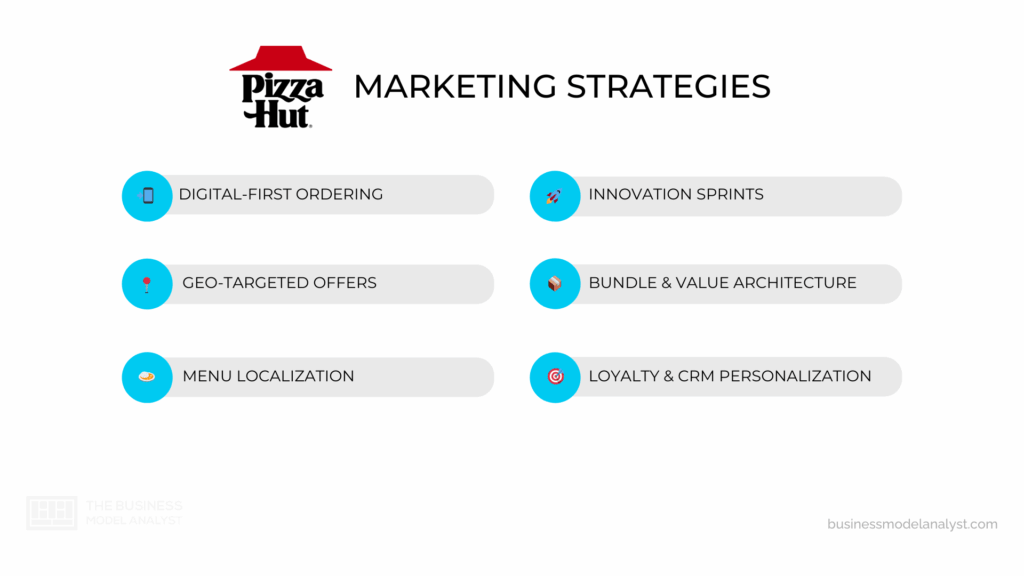
Pizza Hut builds its brand equity by maintaining consistent quality, recognizable branding, and a global presence. Its well-known tagline reinforces familiarity, helping the brand stay top-of-mind in a competitive quick-service restaurant market.
The company applies value-based positioning, balancing affordability with premium options. This allows Pizza Hut to appeal to both price-sensitive customers and those looking for upgraded dining experiences.
In terms of competitive advantage, Pizza Hut leverages its wide distribution network, dine-in and delivery services, and strong digital platforms. Its ability to adapt menus to local tastes in emerging markets also strengthens its market relevance.
Pizza Hut’s parent company, Yum! Brands, supports its strategies with shared resources, technology, and global supply chain efficiencies. This backing helps drive business growth across different regions.
The brand’s portfolio can also be analyzed through the BCG matrix. Core pizza products often fall into the “cash cow” category, while new menu innovations and digital initiatives may be considered “question marks” or potential “stars” depending on their market performance.
Key elements of Pizza Hut’s approach include:
- Product innovation to attract new customers
- Localized marketing to fit cultural preferences
- Digital engagement through apps and social media
- Promotions designed to drive repeat orders
By combining these strategies, Pizza Hut continues to strengthen its position in the global fast-food industry while adapting to changing consumer expectations.
For more detail on how these strategies are applied, see this breakdown of Pizza Hut’s marketing mix and strategy and insights on its global marketing approach.
Pizza Hut Channels
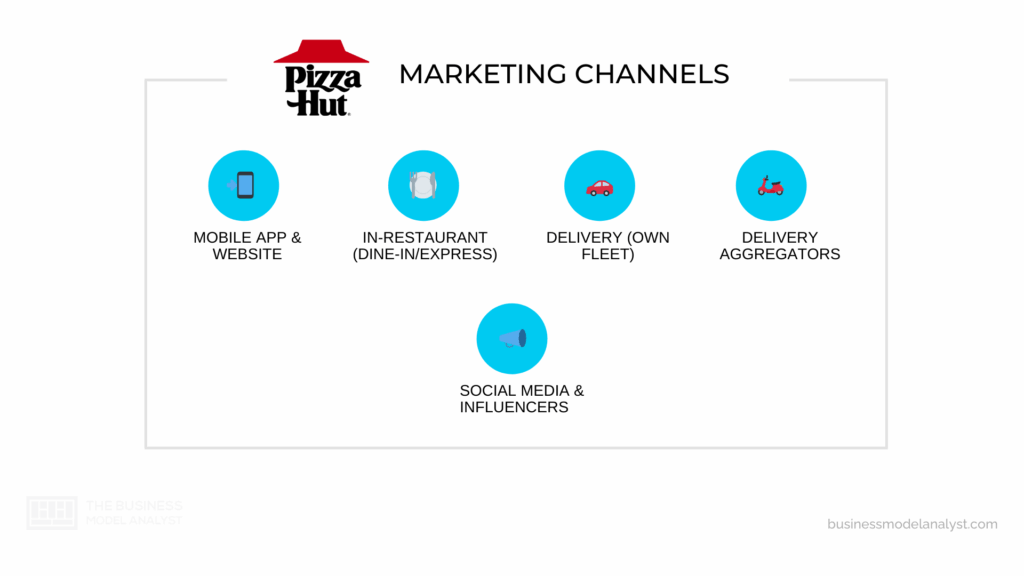
Pizza Hut uses multiple channels to reach customers and maintain its global market share. Its distribution strategy includes dine-in restaurants, delivery, and carryout services, allowing flexibility across different markets.
Digital platforms play a central role. The brand invests in mobile apps, websites, and third-party delivery services to improve customer engagement and convenience. Social media campaigns also help the company connect with younger audiences and respond quickly to feedback.
When compared to competitors like Domino’s, Pizza Hut emphasizes both physical presence and digital growth. Domino’s focuses heavily on technology-driven delivery, while Pizza Hut balances dine-in experiences with online ordering. This approach supports broader customer analysis and adapts to regional preferences.
| Channel Type | Purpose | Example Use Case |
| Dine-in | Traditional restaurant experience | Family dining |
| Delivery | Convenience and speed | Online orders |
| Carryout | Quick pick-up option | Lunch breaks |
| Digital Platforms | Engagement and personalization | Mobile app deals |
Customer satisfaction remains a priority across these channels. Pizza Hut adapts menus and promotions to local tastes, while maintaining consistent service standards. This helps strengthen brand loyalty in competitive markets.
By using a mix of physical outlets and digital tools, Pizza Hut ensures its products remain accessible to a wide audience. This multi-channel approach is a key factor in sustaining relevance in the fast-food industry, as seen in its evolving marketing strategy.
How To Apply Pizza Hut Strategies To Your Business
Businesses can learn from Pizza Hut’s focus on adapting to customer needs. The brand uses geographical and psychographic segmentation to tailor menu items to local markets, showing how small businesses can adjust offerings to match customer preferences in different regions or demographics.
A clear pricing approach also plays a role. Pizza Hut balances affordability with premium options, giving customers choice without diluting brand value. A business can apply this by offering tiered products or services that appeal to different budgets without losing consistency.
Key areas to consider:
- Product: Innovate while maintaining core items customers trust.
- Price: Provide value while keeping profitability in mind.
- Place: Ensure availability through delivery, online platforms, and physical locations.
- Promotion: Use both traditional ads and digital campaigns.
Pizza Hut also invests in digital marketing and loyalty programs to retain customers. Businesses can replicate this by building a strong online presence and rewarding repeat buyers, as seen in its marketing mix strategy.
Influencer partnerships and social media campaigns help Pizza Hut connect with younger audiences. Smaller businesses can adapt this by collaborating with local influencers or community figures, as highlighted in strategies that emphasize influencer engagement.
A simple framework for applying these strategies is shown below:
| Strategy Area | Application for Small Business |
| Product | Adjust menu/services to local tastes |
| Price | Offer budget and premium options |
| Promotion | Mix digital ads with community outreach |
| Place | Expand availability with delivery or online sales |
Conclusion
Pizza Hut continues to adapt its marketing strategy by balancing global consistency with local customization. This approach allows the brand to maintain recognition while meeting regional preferences.
Key elements such as product innovation, competitive pricing, and convenience-driven services remain central to its efforts. These strategies help the company stay relevant in a highly competitive quick-service restaurant market.
A focus on digital engagement has become increasingly important. Pizza Hut invests in online ordering platforms, mobile apps, and targeted social media campaigns to strengthen customer interaction and brand visibility.
The brand also leverages loyalty programs and promotional offers to encourage repeat purchases. These tactics help sustain customer retention while attracting new diners.
| Strategic Area | Key Focus |
| Product Innovation | New flavors, localized menus |
| Pricing | Discounts, value deals |
| Distribution | Delivery, carryout, dine-in options |
| Digital Presence | Apps, social media, online ads |
| Customer Loyalty | Rewards programs, promotions |
By combining these elements, Pizza Hut positions itself to compete with global and regional players. Its marketing strategy emphasizes adaptability, customer convenience, and steady brand engagement across different markets.
This structured approach enables the company to remain a recognized leader in the fast-food pizza segment while addressing evolving consumer expectations.
Frequently Asked Questions
Pizza Hut applies structured marketing frameworks, adapts its promotional campaigns to changing consumer behavior, and uses segmentation to reach diverse customer groups. Its strategies balance product innovation, pricing, and brand communication to maintain competitiveness in the quick-service restaurant industry.
How does Pizza Hut integrate the 7 P’s of marketing into its strategy?
Pizza Hut incorporates the 7 P’s of marketing by aligning product variety, competitive pricing, and wide distribution with strong promotional campaigns. The brand also emphasizes service processes, staff training, and consistent physical evidence such as store design and packaging. This mix helps deliver a uniform customer experience across markets, as outlined in its marketing mix strategy.
What recent tactics has Pizza Hut employed to enhance its brand positioning?
Pizza Hut has invested in digital transformation by expanding online ordering, app-based loyalty programs, and social media campaigns. It has also tested limited-time menu items to attract younger audiences and differentiate from competitors. These efforts are part of its brand positioning strategy to remain relevant in a competitive fast-food landscape.
In what ways does Pizza Hut’s mission statement influence its marketing decisions?
Pizza Hut’s mission emphasizes delivering quality food and enjoyable dining experiences. This focus guides decisions on menu innovation, customer service, and community engagement. Marketing campaigns often highlight convenience, value, and family-friendly dining, aligning with the company’s stated commitment to customer satisfaction.
How does Pizza Hut’s pricing strategy affect its market competitiveness?
Pizza Hut uses a value-based pricing strategy that balances affordability with perceived quality. It frequently offers bundle deals, discounts, and loyalty rewards to attract price-sensitive customers. This approach allows the brand to compete effectively with rivals while maintaining profitability through upselling and premium menu items, as seen in its pricing strategy.
What demographic and psychographic segmentation approaches does Pizza Hut use?
Pizza Hut applies demographic segmentation by targeting families, young adults, and working professionals across income groups. Its psychographic segmentation focuses on convenience seekers, social diners, and customers who value variety. The company leverages both approaches to tailor products and marketing campaigns, as explained in its segmentation strategy.
Can you describe a successful promotional campaign by Pizza Hut?
One notable campaign involved limited-time offers tied to major sporting events, encouraging group orders and boosting delivery sales. Another example featured digital-first promotions with exclusive app discounts, which increased online engagement. These campaigns highlight how Pizza Hut adapts promotions to consumer behavior while reinforcing its promotional strategy.
link